Plant-Based Skin Rejuvenation Riola MTS

Exotriple (Riola)

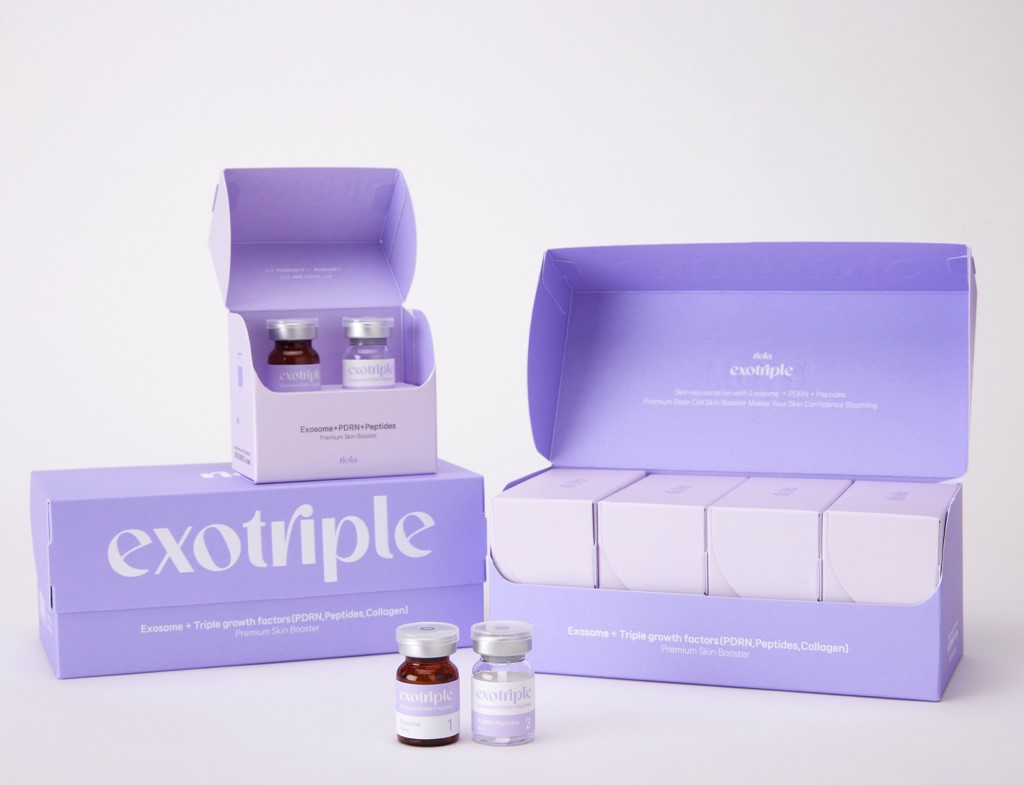
A dual-vial professional skin booster from CNB International Co., Ltd. (South Korea). The "triple" in Exotriple refers to its three core active categories: CICA-derived plant exosomes, PDRN sourced from wild Alaskan salmon, and an atelocollagen + peptide complex. Designed for MTS (Micro-Needle Therapy System) and post-microneedling workflows in professional aesthetic settings.

Brand / Range
Riola (by CNB International Co., Ltd.)
Manufacturer
CNB International Co., Ltd. (South Korea, est. 2018)
Source Type
Plant-Based Exosome (CICA / Centella asiatica)
Category
Skin Rejuvenation
Format
Dual-vial: No.1 Freeze-dried exosome ampoule (100 mg) + No.2 PDRN solvent (6 ml)
Key Actives
CICA Exosome (plant) + PDRN (wild Alaskan salmon) + Atelocollagen + Peptides
Primary Use
MTS / Microneedling-assisted delivery — professional clinic use only
Treatment Interval
Once every 2 weeks
Contraindications
Wounded skin, eczema, dermatitis — do not use
CICA ExosomePDRNCollagenPeptidesMTSPost-MicroneedlingAnti-Inflammatory
Product Overview

What Is Exotriple?

Exotriple is the Riola brand's professional skin booster from CNB International, a South Korean cosmetics manufacturer founded in 2018. It is a dual-vial, lyophilized exosome product built around three active ingredient categories — hence "triple."

Vial 1 contains freeze-dried CICA exosomes (Centella asiatica-derived, plant-based). Vial 2 contains the PDRN solvent plus atelocollagen and a peptide complex. The two are mixed immediately before use by injecting the solvent into the exosome powder and shaking until fully dissolved, then applied to clean skin 1–3 minutes before MTS or microneedling treatment.

Its positioning is specifically built around MTS (Micro-Needle Therapy System) protocols — the product is designed to be applied before or immediately after microneedling, to take advantage of temporary microchannels for enhanced topical delivery. This distinguishes it from skin boosters designed for standalone intradermal injection.

Regulatory Note: Exotriple is a professional aesthetic product manufactured by CNB International Co., Ltd. It is not a pharmaceutical. It has not received FDA, EMA, or equivalent drug regulatory approval. There are currently no FDA-approved exosome products. For professional clinic and practitioner use only.

The Triple-Action Formula — What It Actually Means

Three Active Categories in One Protocol

The "triple" in Exotriple refers to three distinct active ingredient categories combined in a single reconstituted solution. Each category contributes a different biological profile to the overall formulation.

🌿

Active 1: CICA Exosomes (Centella asiatica — Plant-Derived)

High-purity exosomes derived from Centella asiatica (CICA). Plant-origin exosome-like nanovesicles studied for anti-inflammatory properties, skin cell regeneration support, and collagen synthesis activity. Centella asiatica has an established evidence base as a topical active in dermatology — the exosome delivery format is an emerging application of this botanical source.

🐟

Active 2: PDRN (Polydeoxyribonucleotide — Wild Alaskan Salmon)

Polydeoxyribonucleotide sourced from wild Alaskan salmon. PDRN is one of the more evidence-established actives in Korean professional aesthetics, with published literature on skin hydration support, tissue repair, and anti-inflammatory effects. Its inclusion gives Exotriple an evidentially grounded anchor alongside the emerging exosome component.

💊

Active 3: Atelocollagen + Peptide Complex

Atelocollagen (a purified collagen with low immunogenicity) combined with a peptide complex. Peptides in the formulation include components associated with collagen and elastin synthesis, skin lifting, and extracellular matrix support. Additional documented actives in the solvent ampoule include arbutin, ascorbic acid, glutathione, adenosine, carnitine, and arginine.

Formulation

Ingredients — What's in Each Vial

Full formulation per publicly available CNB International product documentation:

Vial No.1 — Freeze-Dried Exosome Ampoule (100 mg)

  • CICA Exosomes — plant-derived exosome-like nanovesicles from Centella asiatica callus
  • Lyophilized powder format — preserves exosome bioactivity through storage

Vial No.2 — PDRN + Collagen + Peptides Solvent (6 ml)

  • PDRN — polydeoxyribonucleotide from wild Alaskan salmon
  • Atelocollagen — purified collagen for structural and hydration support
  • Peptides complex — including tripeptide complex for collagen and elastin synthesis support
  • Arbutin — skin brightening and hyperpigmentation support
  • Ascorbic acid (Vitamin C) — antioxidant, brightening
  • Glutathione — antioxidant, skin clarity
  • Adenosine — anti-ageing, skin repair
  • Carnitine — cellular energy and metabolism support
  • Arginine — amino acid for skin regeneration support

Formulation note: The above reflects publicly available product literature from CNB International and verified reseller listings. Full INCI list and concentration data should be confirmed with manufacturer documentation before clinical use. Batch specifications may vary. Always reference official CNB International product documentation for the specific variant being sourced.

MTS Protocol

How to Use Exotriple — MTS Method

Step 1: Reconstitution

Inject the PDRN solvent (Vial 2) into the freeze-dried exosome ampoule (Vial 1). Shake until the lyophilized powder is completely dissolved. Do not use if the solution is unclear or contains undissolved particles.

Step 2: Pre-MTS Application

Apply a generous amount of the reconstituted solution to clean skin. Wait 1–3 minutes to allow initial absorption before proceeding to the microneedling step.

Step 3: MTS Treatment

Perform MTS (microneedling) through or over the applied solution. Needle depth should be adjusted to skin thickness and treatment area — set at 0.2 to less than 1 mm. This allows the solution to be carried into the temporary microchannels created by the needles.

Step 4: Reapplication (if indicated)

A second application of the solution after the MTS pass is used in some protocols. Follow manufacturer protocol documentation and practitioner training for specific post-needling application technique.

Treatment interval: once every 2 weeks per manufacturer guidance. Exotriple must not be applied to wounded skin, active eczema, or dermatitis. Do not use on broken or inflamed skin. For professional clinic use by trained practitioners only.

Use Cases & Treatment Areas

Clinical Applications

Primary Use Cases

  • MTS / microneedling-assisted skin delivery
  • Post-procedure skin quality support
  • Skin regeneration and texture refinement
  • Anti-inflammatory skin calming post-needling
  • Brightening and hyperpigmentation support
  • Elasticity and firmness-focused protocols

Treatment Areas

  • Face (primary)
  • Neck and décolleté
  • Areas with uneven texture or enlarged pores
  • Sun-damaged skin requiring tone support

Contraindications

Do not use Exotriple in the following situations, per CNB International manufacturer guidance:

  • Wounded or broken skin at the treatment site
  • Active eczema in the treatment area
  • Active dermatitis in the treatment area
  • Confirm additional contraindications with manufacturer documentation before clinical use
COMPARISON CONTEXT

Exotriple vs Other Products in the Range

Exotriple is the dedicated MTS / microneedling-workflow product in the Exosome Korea range. Here is how it positions against the other skin rejuvenation products:

Exotriple (This Product)

  • Plant-based CICA exosome source
  • MTS / microneedling-specific protocol design
  • Applied to skin surface, delivered via MTS
  • Three-category formulation: exosome + PDRN + collagen
  • PDRN included as evidence-established anchor active
  • Treatment interval: every 2 weeks

EXO NAD+ (Comparison)

  • Plant-based, three botanical stem cell sources
  • Standalone or post-procedure skin booster
  • Broader multi-active formula (NAD+, PDRN, PN, collagen, peptides, glutathione)
  • Positioned as all-in-one skin vitality product
  • Not specifically MTS-protocol-designed
  • Cherry Medi manufacturer vs CNB International

Exotriple (Plant-Based)

  • CICA plant exosome source
  • Lower ethical complexity than human-derived
  • Anti-inflammatory botanical profile
  • Evidence base for CICA and PDRN is relatively established

ASCE+ SRLV (Human-Derived)

  • Human adipose stem cell exosome source (ExoCoBio)
  • Published clinical RCT data for skin + microneedling
  • Growth factor profile aligned to human skin biology
  • Intradermal or post-needling topical application
Related Products

More Plant-Based Skin Rejuvenation

Plant-Based

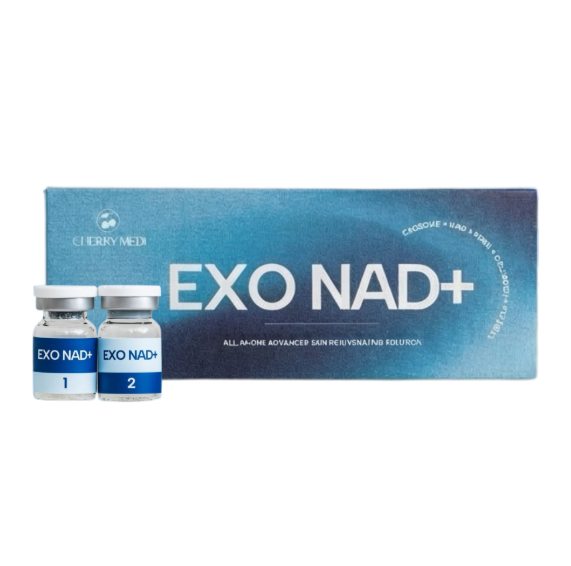
EXO NAD+

Korea's all-in-one flagship plant-based exosome skin rejuvenating solution with NAD+ complex.

Flagship NAD+
View Product
Plant-Based

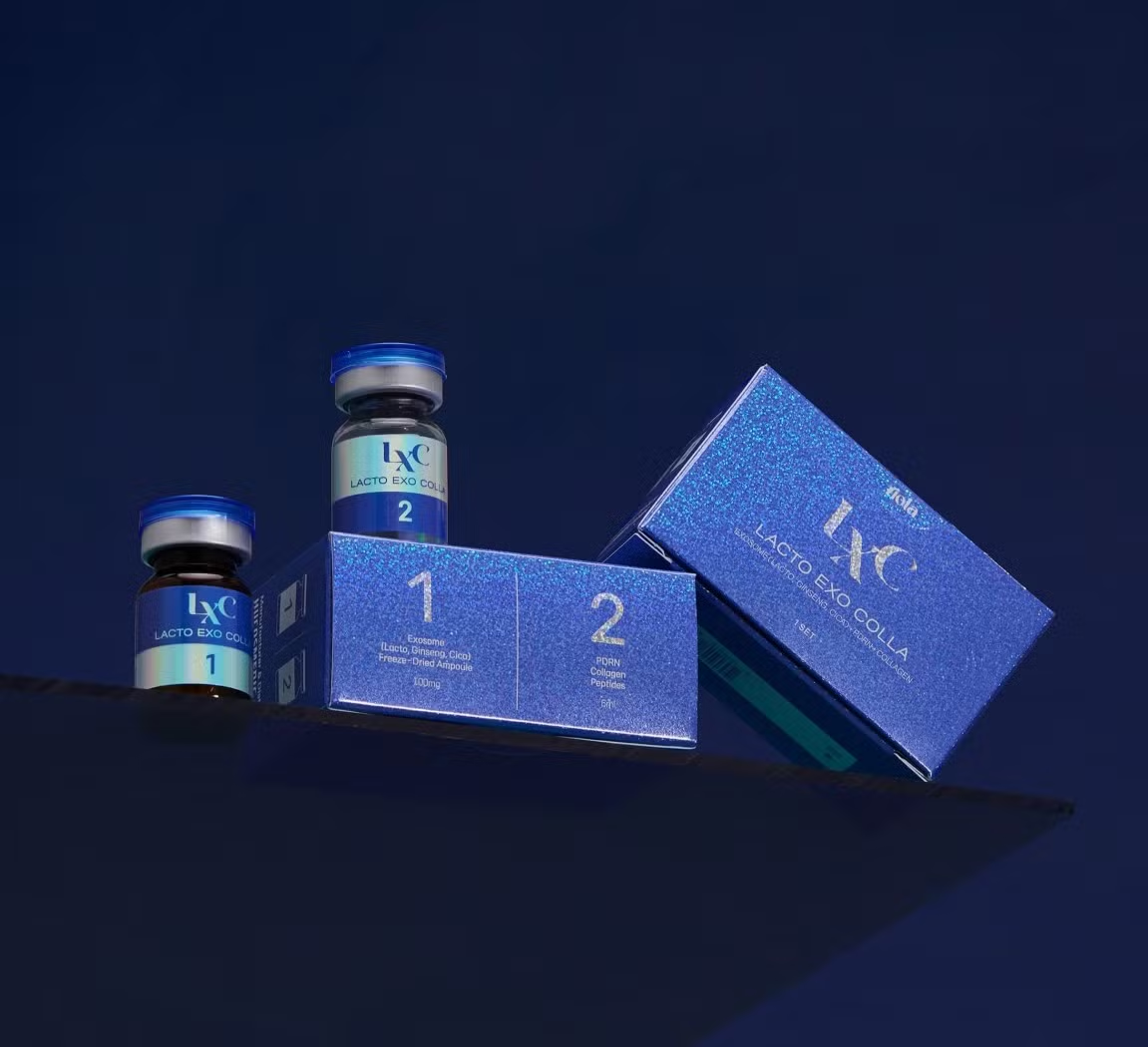
LXC Lacto Exo Colla

5th-generation triple exosome complex (Lactobacillus + Ginseng + CICA) with H-PDRN and 7 peptides.

Triple Exosome 5th-Gen
View Product
Plant-Based

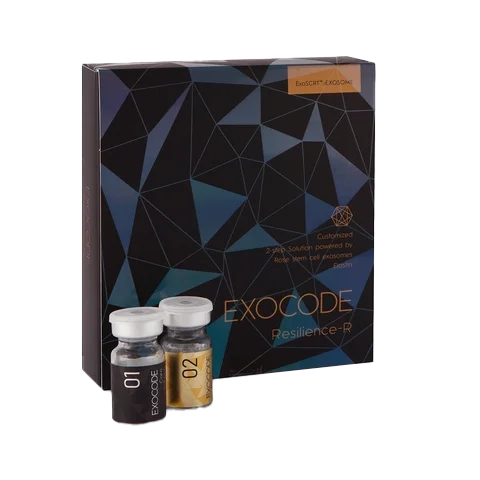
EXOCODE Resilience - R

Rosa Damascena ExoCoBio exosome formulation targeting elasticity and firmness. ExoSCRT™ technology.

Elasticity Firmness
View Product
Frequently Asked

Exotriple Questions

The "triple" refers to the three core active ingredient categories combined in one product: CICA plant exosomes, PDRN (from wild Alaskan salmon), and an atelocollagen + peptide complex. The product has a single exosome type — CICA-derived. It is not three separate exosome fractions. Each active category contributes a distinct biological profile to the overall formulation.
CICA exosomes are plant-origin extracellular vesicle-like nanovesicles derived from Centella asiatica (CICA). Centella asiatica has an established record in dermatology for anti-inflammatory and wound-healing properties. The exosome delivery format is intended to carry this botanical active profile in a nanoscale vesicle structure. A 2025 peer-reviewed study (MDPI Cosmetics) evaluated CICA-derived extracellular vesicles in a topical ampoule format, finding no irritation in a 30-participant patch test and improvements in pore characteristics, hydration, and skin density over two weeks.
A standard PDRN injectable delivers a focused polynucleotide payload via intradermal injection. Exotriple combines PDRN with CICA exosomes and collagen/peptides, and is applied topically to the skin surface in conjunction with MTS needling — not injected directly. The delivery mechanism (MTS-assisted topical vs. direct intradermal injection) is the primary distinction, alongside the additional active categories.
Exotriple is designed for MTS (mechanical microneedling) protocols. Whether it is suitable for RF microneedling workflows depends on the specific device protocol and the treating practitioner's clinical judgment. RF microneedling creates a different skin environment than mechanical needling. Consult manufacturer documentation and the device manufacturer's guidelines before using Exotriple in RF microneedling workflows.
Some practitioners use plant-based exosome products in post-laser protocols. However, post-laser contraindications and skin state differ from post-microneedling conditions. Timing, skin integrity, and treatment-area assessment are essential. Consult manufacturer guidance and practitioner training specific to post-laser protocols before incorporating Exotriple.
Exotriple is plant-based (CICA exosome) and designed for topical MTS application — it is reconstituted and applied to the skin surface before needling. ASCE+ SRLV is human-derived (ExoCoBio adipose stem cell exosomes) and used either intradermally or as a post-microneedling topical. ASCE+ SRLV has published peer-reviewed RCT data for the skin + microneedling combination. Both categories have open regulatory and evidence questions — practitioner context, patient profile, and source type preference guide the choice.

Exotriple · Clinic · Wholesale

Inquire About Exotriple for Your Clinic or Distribution

Wholesale and clinic purchasing inquiries for Exotriple and the full Korean exosome skin rejuvenation range. Contact Exosome Korea to discuss product availability, pricing, minimum order quantities, and microneedling protocol documentation.